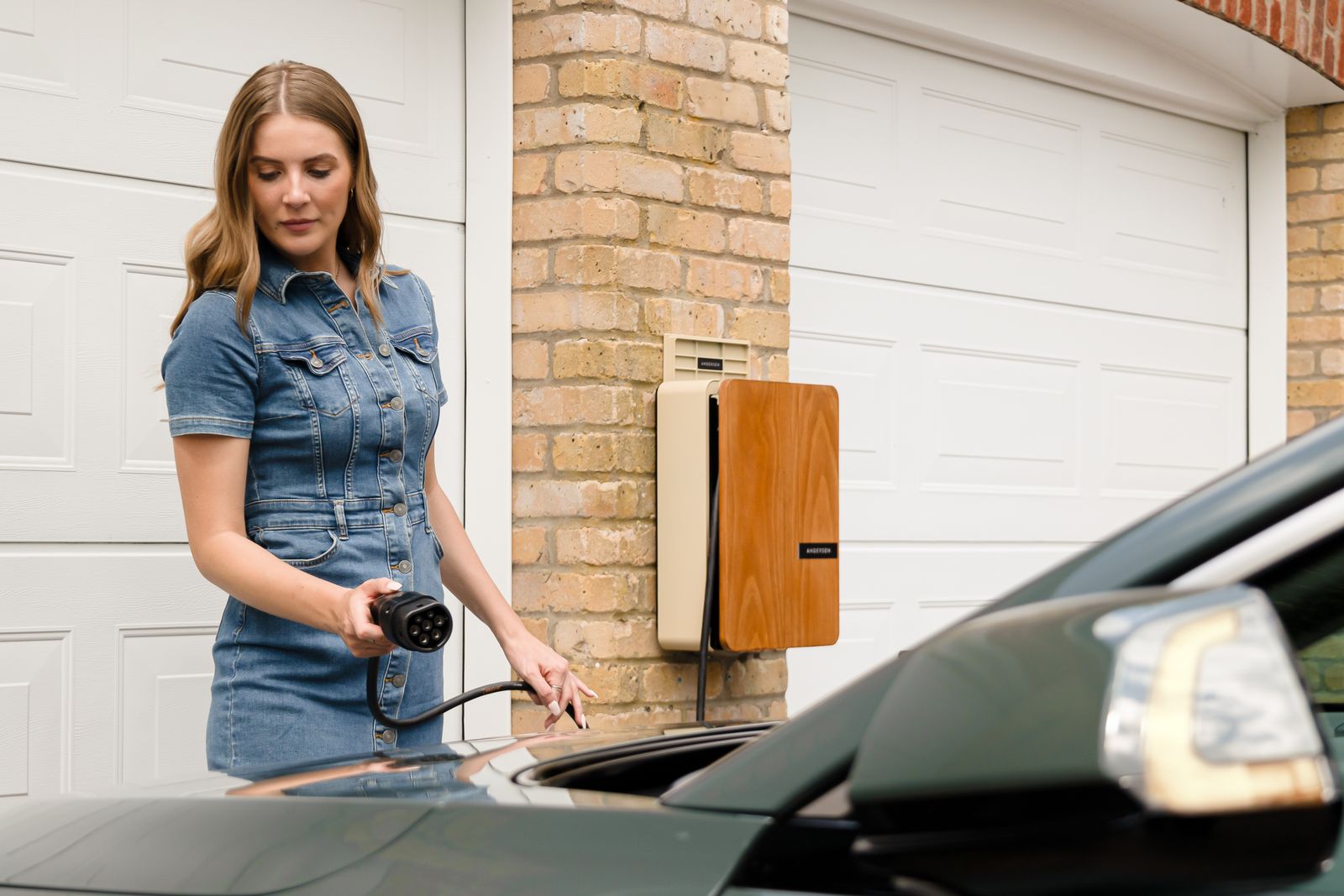
Installing a home EV charger: what’s involved and what it costs
Most electric car owners charge at home, overnight, most nights. The question is whether a standard power point is enough or whether you need a dedicated wall charger.
Do you need a wall charger at all?
Every EV comes with (or can use) a portable charger that plugs into a normal 10-amp power point. That adds roughly 10–15 km of range per hour. Overnight, that’s 100–150 km, which covers the daily driving of many households.
A wall charger (often called a wallbox) on a dedicated circuit usually charges at 7 kW single-phase, adding around 40–50 km of range per hour. That suits longer commutes, two-EV households, and people who want to charge quickly in the middle of the day from solar.
If you’ll use the portable charger, have an electrician check that the power point and circuit you’ll use are in good condition. Running a car charger at full load for hours exposes worn sockets and loose connections.
Single-phase or three-phase?
Most homes have single-phase power, which limits home charging to about 7 kW. Three-phase homes can charge at up to 22 kW, but many cars can only accept 7–11 kW on AC charging anyway. Upgrading to three-phase just for EV charging is rarely worth it.
Typical costs
| Item | Typical range |
|---|---|
| 7 kW wall charger (hardware) | $900 – $2,000 |
| Installation, short run from switchboard to garage | $600 – $1,200 |
| Installation, long run, trenching or a separate garage | $1,200 – $3,000 |
| Switchboard upgrade if needed | $1,400 – $2,800 |
| Dedicated 15-amp outlet for a portable charger | $350 – $700 |
The electrical side
A wallbox needs its own circuit from the switchboard with the right cable size, circuit breaker and RCD protection. The electrician also has to check the home’s maximum demand. If you already have ducted reverse-cycle, an induction cooktop and electric hot water, adding a 7 kW charger can push a single-phase supply close to its limit. Many chargers can be set up with load management so they slow down when the house is using a lot of power.
All of this is regulated electrical work. It must be done by a licensed electrician working for a Registered Electrical Contractor, and you should receive a Certificate of Electrical Safety. You can check an electrician’s licence at Energy Safe Victoria, which also publishes general guidance on safe EV charging at home.
Charging from solar
If you have rooftop solar, a “solar-aware” charger can increase or decrease its charging rate to match your excess solar. On sunny days you can add a lot of range using power you’d otherwise export for a few cents. It works best if the car is at home during the day.
Choosing a charger
- Tethered or socket? A tethered charger has the cable permanently attached, which is convenient. A socketed unit uses your own cable, which is tidier and can suit different cars.
- Cable length: measure from the mounting point to the car’s charge port in both parking directions. Five metres is standard; seven or more suits awkward driveways.
- Weather rating: for a carport or driveway, look for at least IP54.
- Smart features: scheduling to cheaper off-peak times, solar matching and load management are the useful ones. App lock-in and subscription fees are worth avoiding.
- Standards: make sure the charger is certified for sale in Australia.
What it costs to run
A typical EV uses around 15–18 kWh per 100 km. At an off-peak rate of 20c/kWh, that’s roughly $3–$4 per 100 km. At a peak rate of 35c/kWh it’s about $5–$6. Charging from excess rooftop solar costs you only the feed-in tariff you would otherwise have been paid. Check your retailer’s EV or time-of-use plans; some offer very cheap overnight rates for EV owners.
Renters and apartments
If you rent, you need the owner’s permission before any electrical work. In apartments and townhouses with shared car parks, the owners corporation usually needs to approve the work and decide how electricity use is metered and billed. Starting that conversation early saves months.
Questions to ask the electrician
- Is my switchboard and supply suitable, or does it need work?
- What size cable and breaker will you use, and how long is the run?
- Can the charger be set up with load management?
- Will the charger be weatherproof where it’s mounted?
- Is the Certificate of Electrical Safety included?
- Does the charger need to connect to Wi-Fi to work, or only for extra features?